In her crime novel “The Nine Tailors,” Dorothy L. Sayers imagined bells with names such as Gaude, Sabaoth, John, Jericho, Jubilee, Dimity, Batty Thomas and Tailor Paul, personifying them in a way that some believed the book must have been inspired by Taylor’s casting style and the living character of real bells. Despite the suggestive name of the tenor, sadly, no direct link has ever been found between the author and the bell foundry.
Among the 25,000 real bells cast by Taylor’s over the centuries, a select few have not just a note, not just a weight, but a human‑style name — the sort you might expect to hear called across a playground, not a ringing chamber. These named bells are scattered across cathedrals, colleges, town halls, and carillons around the world. Here are a few from home shores.
Giants with Voices:
Cast in 1881 and weighing nearly 17 tons, Great Paul is one of the largest bells ever made in Britain. The journey to St Paul’s Cathedral—hauled through London streets by traction engine—was epic. Today, he remains a real symbol of Victorian ambition cast in bronze.
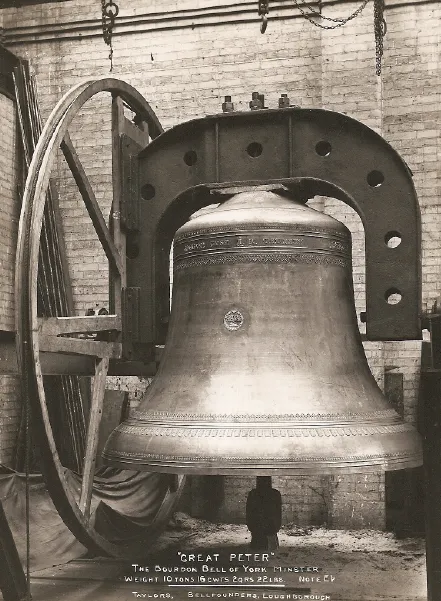
Two significant bells were cast by Taylor’s in 1927. Weighing just over 11 tons, Great Peter holds the distinction of being the heaviest bell in the country rung entirely by hand. His deep, solemn tone has marked historic moments at York Minster for nearly a century. Despite the name, Little John is anything but small. He weighs 10 tons, making him the fifth heaviest bell in the UK. Tuned to E-flat, he is reputed to have the deepest tone of any bell in the country—audible up to seven miles away. Named in tribute to Nottingham’s legendary outlaw, he sounds proudly over Old Market Square.
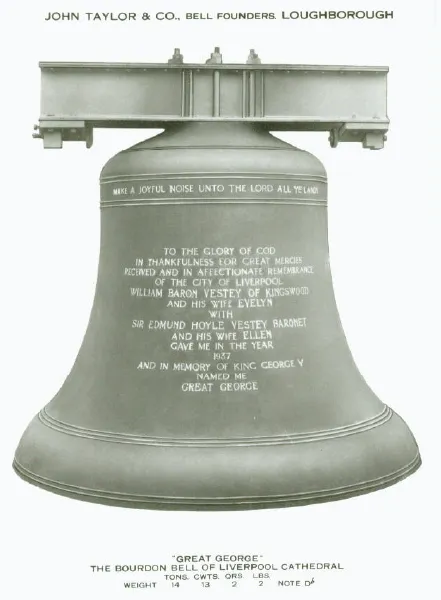
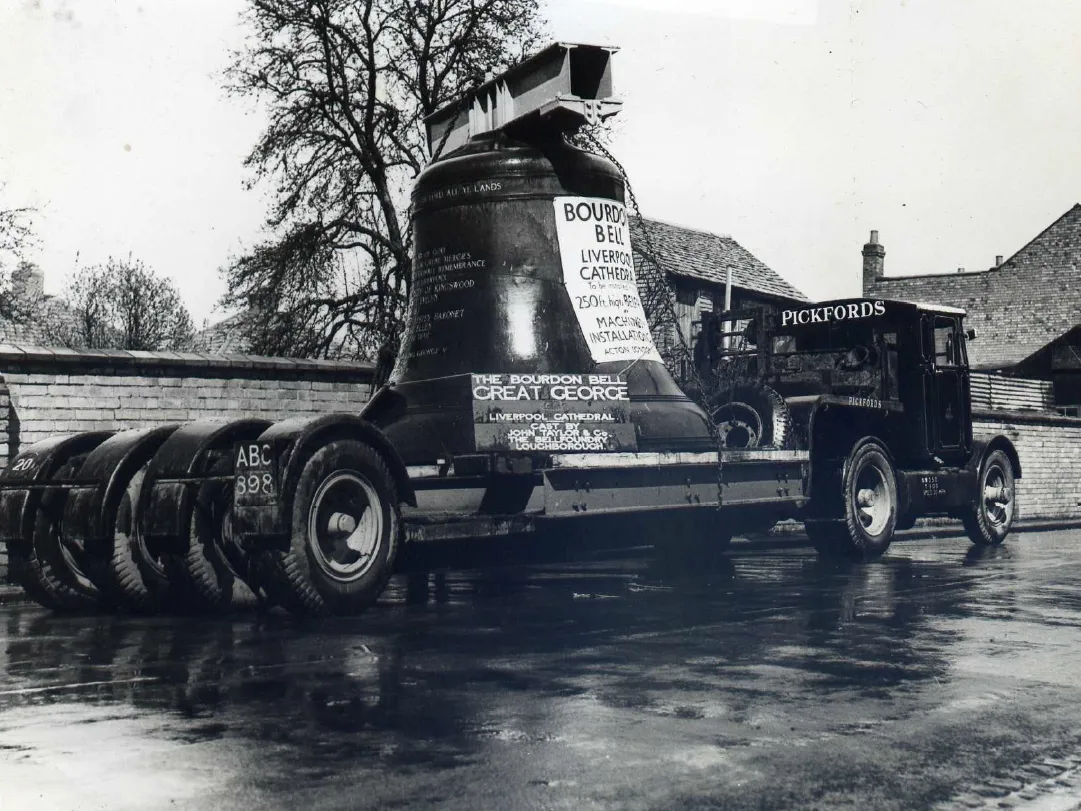
Great George (named after George V) in Liverpool’s Cathedral was cast in 1940. Weighing 14.5 tons, this immense tenor bell was not installed until 1951, delayed by the Second World War. Today, it anchors the sound of Liverpool Cathedral with regal authority.
Academic and Civic Voices
An academic cousin to London’s Great Paul is Great George in The Wills Memorial Bell of University of Bristol. Cast in 1925 and weighing 9.5 tons, this slow-swinging bell has a deep, contemplative voice that suits its scholarly surroundings.
Big Joe, the bourdon bell of the Joseph Chamberlain Memorial Clock Tower, acquired the nickname when it was cast in 1908. Its chime has become one of Birmingham’s defining sounds.
Cathedral Classics
Cast in 1902, Grandisson serves as the tenor of Exeter Cathedral and forms part of the second heaviest ring of bells in the world—a true powerhouse of English bell ringing.
Named after Mayor Abel Heywood, Great Abel was cast in 1936 and weighs over 8 tons. As the hour bell of Manchester’s Town Hall clock, he has marked the city’s passing hours for generations. Also cast in 1936, Hosanna is a remarkable bell not only for her size—7.4 tons—but for tradition: she has always been rung by hand at Buckfast Abbey a rare feat for a bell of such magnitude.
Old Major – cast in 1891 and weighing 5 tons, remains the heaviest bell in Newcastle Cathedral’s tower, a steadfast northern voice.
Sadly my quest to find a bell with a female name has not proved very fruitful although Chris Pickford (Taylor archivist) did track down a bell named Barbara at Inkpen (Berks) cast in 1999 in memory of a parishioner.
Lost Voices
Taylor’s has cast several large bells named Gabriel, but the most notable was the tenor for Addiscombe, cast in 1929. Weighing 50 cwt and tuned to B-flat, Gabriel was returned to the foundry in 1953, replaced by a smaller bell, and ultimately scrapped in 1977—a reminder that even great bells can have fragile futures.
Why Do Bells Have Names?
Most bells are known by pitch, not personality. But when a bell becomes central to a place—through size, sound, dedication, or affection—it often earns a name. Sometimes chosen by donors, sometimes by tradition, and sometimes simply because it feels right, these names turn bronze instruments into local characters.